
How Trauma Impacts Brain Development
When a person experiences trauma—especially early in life—it can change how the brain grows and functions.
Key Brain Areas Affected:
Brain Region | Normal Role | Impact of Trauma |
Amygdala | Detects danger (fight or flight) | Becomes overactive → constant fear or panic |
Hippocampus | Memory and time/context processing | Becomes less active → flashbacks, confusion |
Prefrontal Cortex | Thinking, planning, emotional control | Underdeveloped → poor focus, impulsivity |
HPA Axis | Stress response system | Stays “on” → chronic stress, illness, burnout |
In Children:
Trauma disrupts brain wiring during critical periods of development.
Which can lead to the follow:
Emotional dysregulation
Learning difficulties
Trust and relationship issues
Delays in language and reasoning skills
Long-Term Risks:
PTSD
Anxiety and depression
Poor physical health
Addiction or risky behaviors
Common Trauma Triggers are:
Triggers are things (external or internal) that remind the brain of past trauma and cause a strong emotional or physical reaction even if there’s no current danger.
Types of Triggers:
Sensory: sounds, smells, touch (e.g., loud noise, a certain perfume)
Situational: arguments, being alone, feeling out of control
Emotional: shame, helplessness, rejection
Relational: tone of voice, body language, abandonment cues
Anniversaries: dates or times connected to the trauma
How Triggers Work:
The amygdala senses “danger” → triggers a fight, flight, freeze response
The prefrontal cortex may shut down → person can’t think clearly
The body reacts the similar to as if the trauma is happening again.
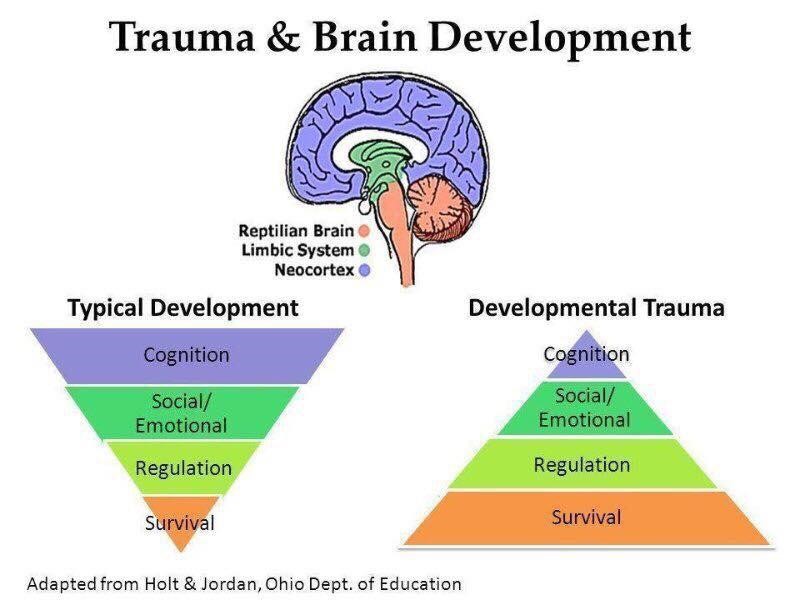
Trauma can change how the brain interprets the world. When someone has lived through distressing experiences, the brain learns to stay on alert as a way of staying safe. As a result, even neutral or ambiguous situations can feel threatening or stressful. This happens because trauma affects how different parts of the brain work together — increasing activity in areas that detect danger and reducing the calming influence of regions that help with reasoning and emotional regulation.
This isn’t a sign of weakness — it’s the brain’s way of trying to keep you protected.
Therapies like Brainspotting and EMDR help the brain and body process what’s been stuck, so you can move from survival mode into a greater sense of safety and calm.
Over time, your brain relearns that it doesn’t have to stay on high alert — it can rest, connect, and heal.